


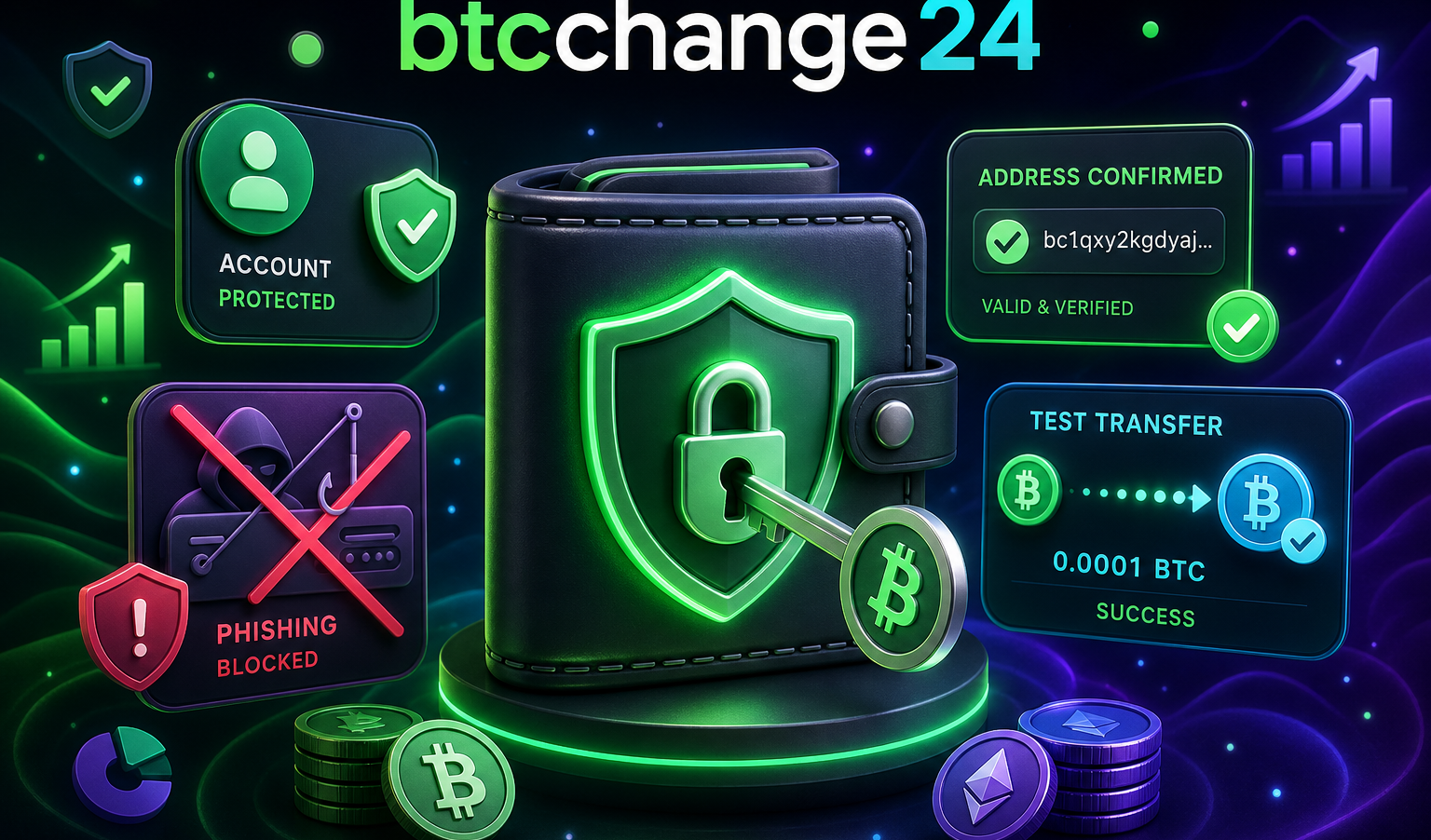
Practical cryptocurrency security does not begin at the moment of a hack. It starts much earlier: with how you store your seed phrase, separate wallets, verify addresses, and react to urgent messages. In real life, people usually lose money not because the blockchain failed, but because of haste, phishing, the wrong network, or a harmful signature.
Where security really works in practice
The most useful approach is to separate operations by scenario. One wallet is used for long-term reserves, another for everyday transfers, and a third for new dApps and tests. That way, one mistake does not expose the entire portfolio.
- cold storage for the main balance;
- a hot wallet for regular transactions;
- a test wallet for new websites, NFT projects, and DeFi;
- a separate email address and 2FA for exchanges and financial services.
Checking the address and network before a transfer
Most mistakes happen in the last ten seconds before sending. A user copies the address, recognizes the first characters, and rushes to confirm the transfer. A safer routine is to verify the first and last characters, the selected network, the amount, and whether you have enough native coins for the fee.
Practical example. If you are sending stablecoins or bitcoin to a new address, it is usually wise to start with a small test transfer. This matters even more when you use a new network, a new service, or a large amount.
Account protection matters as much as the wallet itself
In practice, attackers often target email, messengers, cloud storage, or a phone number instead of going after the seed phrase directly. That is why financial services need unique passwords, a password manager, and app-based 2FA instead of SMS when that option is available.
Scenario | Risk | Practical measure |
|---|---|---|
Transfer | Wrong address or wrong network | Verify the address and send a test transaction |
Service login | Compromised email or password | Use a password manager and 2FA |
dApp connection | Malicious signature or unlimited approval | Use a separate test wallet |
Exchange | Phishing domain or fake payment details | Check the domain and the order terms |
Phishing and social engineering
If a message creates urgency, asks you to “save your funds” immediately, or tells you to verify a wallet through a third-party form, that is a reason to stop. Practical security almost always means pausing to check: open the service manually, verify the domain again, and confirm the contact through another channel.
Daily checklist
- Do not store your seed phrase in cloud storage or messengers.
- Separate wallets by purpose.
- Check the address, network, and fee before every transfer.
- Do not sign requests you do not fully understand.
- For meaningful amounts, send a test transaction first.
Answers to common questions
What helps an ordinary user the most?
Not one feature, but a set of habits: 2FA, wallet separation, offline seed phrase storage, and checking the address before sending funds.
Do I need a hardware wallet?
For long-term storage of larger amounts, often yes. But it still does not replace caution with signatures and phishing attempts.
Why is a test transfer considered normal practice?
Because it can catch an address, network, or payment-detail mistake before you send the full amount.
Conclusion
Practical cryptocurrency security is a set of repeatable actions before every operation. The less improvisation there is in storage, transfers, and logins, the lower the risk of losing access or funds.
