


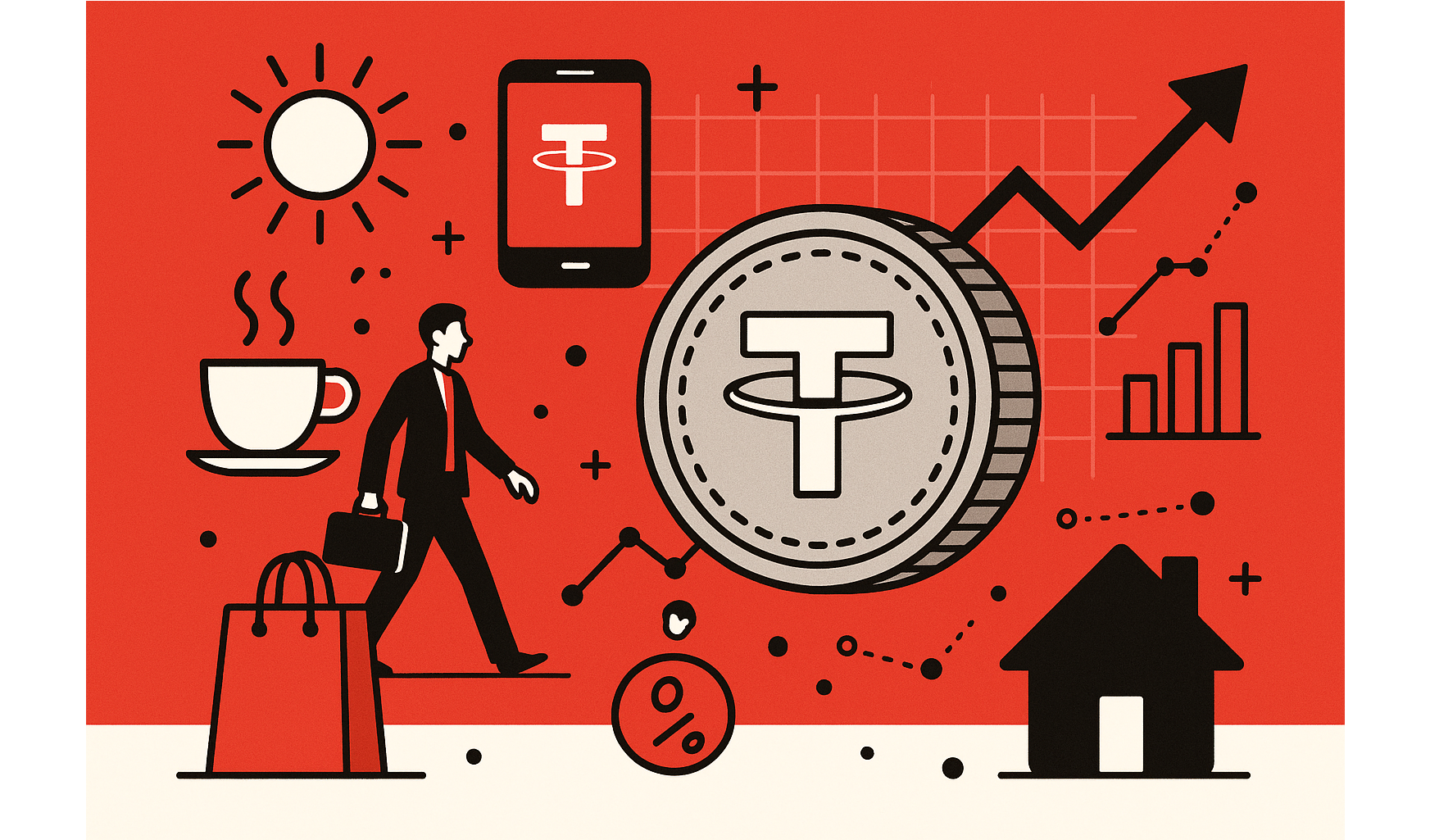
In 2025, cryptocurrencies are no longer seen as something unusual or risky. They've steadily become part of everyday reality, and USDT (Tether) has taken a special place among them. It's not just a digital coin — it's a convenient tool used by millions around the world. Today, a cryptocurrency exchange is no longer reserved for IT specialists or traders. It's a normal part of life for students, freelancers, entrepreneurs, and even retirees.
From Trading to Payments: How USDT Is Used in 2025
Just a couple of years ago, USDT was mainly used on crypto exchanges and wallets. But things have changed. The currency has confidently moved beyond trading platforms.
Many freelancers working with international clients now prefer to receive payments in USDT. It’s fast, convenient, and doesn’t require complex procedures. Once received, they easily convert it via a USDT exchange, withdrawing rubles to a card or in cash.
There are countless cryptocurrency exchanges that allow quick USDT to rubles conversions without verification. USDT exchange platforms are especially popular due to their stable rates, low fees, and lightning-fast speed. For instance, you can message a USDT crypto exchange in Telegram, send your wallet address, and get paid within 10 minutes.
Nowadays, crypto exchange has become a part of household finances. It’s no surprise that the phrase “buy USDT with rubles” sounds as common as “withdraw cash from an ATM.”
Interesting Facts About Tether
The company Tether Limited, which issues USDT, was founded in 2014. It was among the first to introduce the concept of a stablecoin pegged to the US dollar. Despite multiple controversies and investigations, the company has remained strong and continues to grow.
Tether regularly publishes reserve reports and maintains that every token is backed by real assets. As of July 2025, USDT in circulation surpassed $110 billion — more than the GDP of some European nations.
Renowned investor Ray Dalio, founder of Bridgewater Associates, commented in an interview on LinkedIn:
“If a digital dollar is ever adopted, it will probably look like USDT — simple, reliable, and stable.”
Entrepreneur and crypto enthusiast Anthony Pompliano wrote on his X (Twitter):
“Tether has become the new internet dollar. Its impact on global payments is massive.”
Why Is USDT So Popular?
The reasons are simple — convenience, stability, and speed. There's no need for complicated bank-level verification. Just get a crypto wallet and choose a cryptocurrency exchange to convert USDT into rubles or other currencies.
People who don’t want to keep savings in rubles or fear Bitcoin’s volatility often choose USDT — a kind of "safe harbor" in the crypto world. If Bitcoin is associated with risk and growth, USDT represents reliability and stability.
Its popularity is also due to ease of use across crypto exchange platforms with USDT exchange options. Instant buying and selling, minimal fees, and transparent conditions make it a universal financial tool.
Who Buys USDT Today and Why?
Freelancers — for receiving payments and converting them quickly
Entrepreneurs — for international payments
Traders — for hedging market risk
Everyday users — to keep savings in a stable currency
The phrase “buy USDT” has become an everyday term. You can do it even with a Sberbank or Tinkoff card — just find a reliable USDT exchange.
Platforms like Binance, OKX, and Huobi are still popular, but more and more users are choosing local crypto exchange services for their lower fees and no-registration policies. Top exchangers allow you to buy USDT with cash, from a card, or even via QR code.
Does USDT Have a Future Like the Dollar — or Is It Just for Wallets and Exchanges?
Can USDT be compared to the US dollar or euro? In some ways — yes. In the digital economy of 2025, USDT plays a similar role to what the dollar did in the global economy decades ago. However, it’s not officially recognized by governments as legal tender (at least, not yet).
That said, some countries already use USDT for real-world payments — from buying cars to renting apartments. In places like Turkey, Argentina, and Venezuela, it often replaces local currencies. This has become possible due to the decentralized nature of the token and its accessibility via crypto exchanges.
In Russia, demand for stable digital assets is growing. People frequently ask, “how to buy cryptocurrency,” and the answer is often, “Start with USDT — it’s simple, fast, and safe.” Most users head straight to a cryptocurrency exchange offering instant USDT exchange in just two clicks.
Real-Life Benefits of Using USDT
Stable value — pegged to the US dollar
Accessibility — many USDT exchange platforms offer quick purchases and withdrawals
Fast transactions — especially on TRC20 and ERC20 networks
Anonymity — minimal documentation required
Integration — real businesses already accept payments in USDT
Popular Exchange Directions on Btcchange24: Fast, Simple, and Reliable
Today, it’s easier than ever to complete a USDT exchange using trusted services. One of the most reliable is Btcchange24, which offers verified directions with high user trust:
USDT → SBP — instant transfers to any Russian bank card via the Faster Payments System
Bitcoin → MIR — fast BTC to ruble conversion with payout to MIR cards
Payeer → Bitcoin — convenient for Payeer wallet users looking to invest in Bitcoin
The platform offers minimal fees, fast processing, and solid user reviews across forums and social media.
Conclusion
USDT has already become an essential part of the digital economy. What was once just a trading tool has evolved into a practical financial solution for millions. Today, crypto exchange is as routine as transferring money from one card to another. Around the world, people no longer just ask “how to buy cryptocurrency” — they deliberately choose USDT as their main digital currency.
If Bitcoin used to be considered the king of crypto, USDT is now its stable counterpart in real-world payments. The future will show whether it will stand alongside the dollar and euro in the global economy. But one thing is clear today: USDT exchange isn’t about the future — it’s already happening now.
