


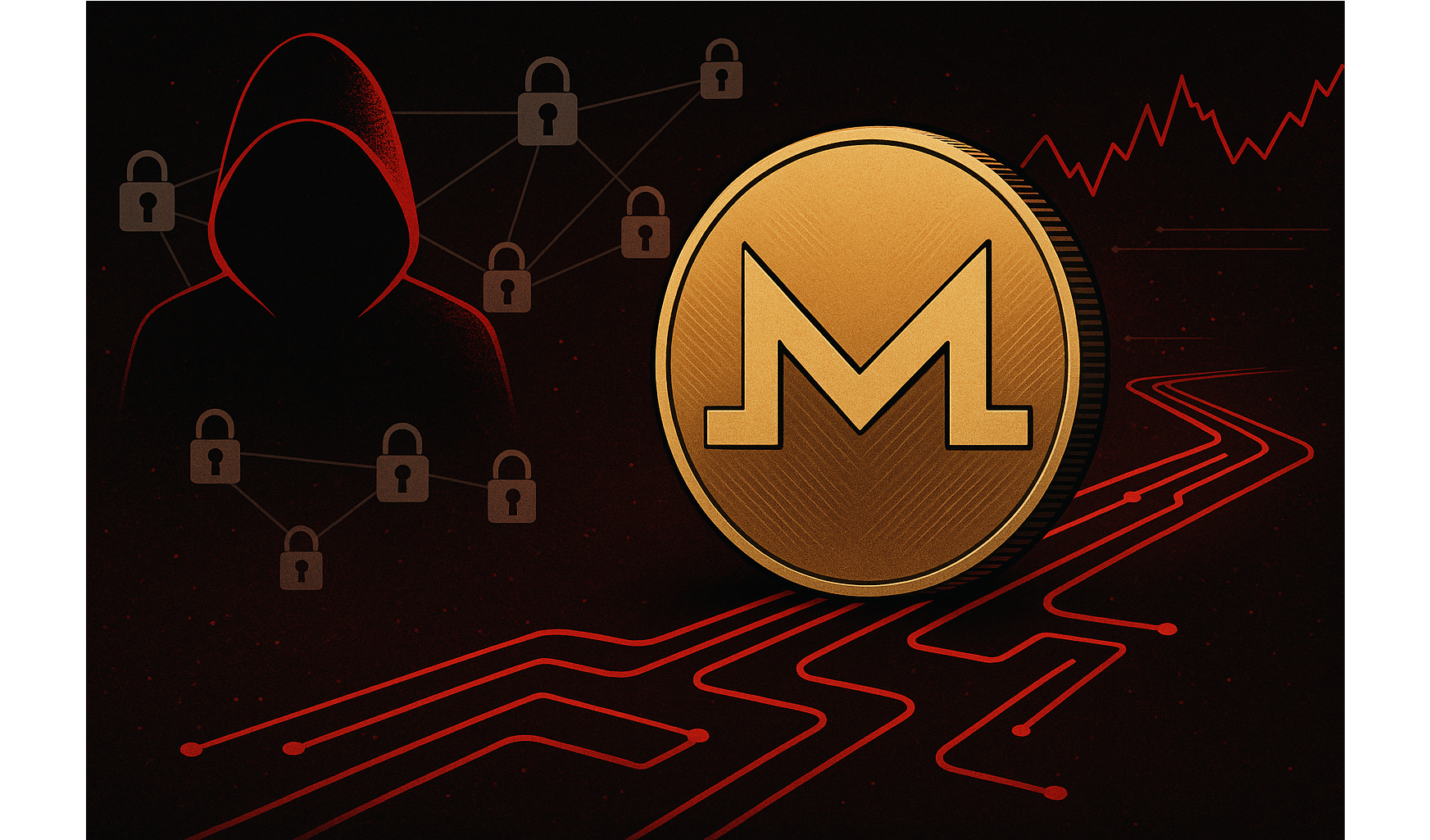
When people talk about digital assets, most immediately think of Bitcoin or Ethereum. But among dozens of anonymous coins, it is monero (XMR) that holds a special place. In the crypto community, this coin has long been known as the “invisible one” — a currency that leaves no traces and guarantees maximum privacy. Let’s explore the secret of monero, how its blockchain works, how it differs from other projects, and why interest in it has not faded for more than ten years.
The History and Philosophy of Monero
Monero (XMR) was launched in 2014 as a fork of the Bytecoin project. The development team aimed to create a cryptocurrency with true privacy, where transaction data would not be public. Unlike Bitcoin, where every operation can be viewed, the Monero blockchain is built on the mechanisms of Ring Signatures and Stealth Addresses. This means that information about who sent what amount to whom is hidden within the network.
Famous cryptographer and privacy advocate Edward Snowden has repeatedly emphasized the importance of anonymous currencies:
“Monero is one of the few projects that doesn’t just talk about privacy but makes it real.” — Snowden on X (Twitter).
This philosophy has made XMR the choice for those who value freedom and confidentiality.
How Monero Differs from Other Cryptocurrencies
When comparing Monero to popular coins like Bitcoin or Litecoin, the differences are clear.
Bitcoin is transparent — every transaction is permanently recorded in the blockchain and can be viewed through explorers.
Ethereum also preserves the full history of transactions and smart contracts, making them public.
Monero, on the other hand, completely hides the data — amounts, senders, and recipients.
This makes xmr obmen (xmr exchange) a unique process: unlike traditional operations, it is fully protected from third-party analysis.
Financial analyst and author of Attack of the 50 Foot Blockchain, David Gerard, writes:
“Monero is a true nightmare for regulators. They cannot trace transaction chains, and that is why the project simultaneously draws interest and suspicion.” — David Gerard’s blog.
Monero Blockchain: How Protection Works
The Monero blockchain is based on the CryptoNote protocol, which makes privacy a systemic feature. Its core technologies include:
Ring Signatures — a transaction is signed by a group of users, making it impossible to identify the real sender.
Stealth Addresses — every transaction uses a one-time address, even if the funds go to the same wallet.
RingCT (Ring Confidential Transactions) — hides the amount being transferred.
Thanks to these tools, monero obmen (monero exchange) or any purchase of the coin remains fully anonymous.
Why Monero Is So Popular
There are several reasons behind its popularity:
Privacy. In an age where digital footprints reveal more and more about us, XMR has become a way to protect oneself.
Accessibility. Anyone can buy monero through exchanges or an obmennik kriptovalyuty (crypto exchange service) and then store it in private wallets.
Fundamental value. As ShapeShift founder Erik Voorhees notes:
“Privacy is a basic right. Monero implements it better than anyone else.” — Voorhees on X (Twitter).
These factors maintain consistent demand and make obmen monero (monero exchange) sought after across different countries.
Global Attitudes Toward Monero
Interestingly, attitudes toward Monero vary from country to country.
In the US and EU, XMR often faces criticism from regulators because it is used on darknet platforms.
In Japan and South Korea, some exchanges delisted the coin to avoid government pressure.
In Latin American countries, however, where inflation is high and governments strictly control financial flows, monero has become a popular tool for capital protection.
Despite regulatory pressure, major global exchanges — Binance, Kraken, KuCoin — continue to support xmr obmen.
Where to Buy Monero and How to Exchange XMR
For most users, the journey toward private transactions starts with a purchase. The most common options are:
Exchanges (Binance, Kraken) — here you can buy monero for USD, EUR, or USDT.
Online obmennik kriptovalyuty (crypto exchange services) — a convenient way to quickly convert rubles or other currencies into XMR. Many platforms allow anonymous obmen kripty (crypto exchange) without complex verification.
Local platforms (LocalMonero) — work on a P2P basis and allow users to directly exchange xmr with others.
Services where an obmennik kripty (crypto exchanger) operates are becoming essential for those who value speed and confidentiality.
The Future of Monero: Risks and Prospects
Despite its popularity, Monero faces certain risks:
pressure from regulators concerned about its use in illegal activities;
possible restrictions from exchanges;
competition from other privacy-focused coins such as Zcash and Dash.
Nevertheless, Monero’s unique technology and strong community make it resilient. Analysts believe that demand for anonymous currencies will only grow in the coming years, meaning it will become even easier to buy monero or use an obmennik kriptovalyuty.
Btcchange24 and Popular Exchange Directions
When it comes to the practical use of Monero and other digital assets, the Btcchange24 service stands out. It is a reliable online obmennik kriptovalyuty (crypto exchange) known for stable performance and fair rates. The platform is convenient for both beginners and experienced traders: transactions are fast, and support is always ready to assist.
The most popular exchange directions include:
XMR → RUB — a convenient way to withdraw monero directly into rubles;
BTC → RUB — a classic option for those who want to exchange Bitcoin into fiat;
ETH → RUB — the ability to convert Ethereum through an obmennik kripty without hidden fees;
USDT → RUB — a popular route for stable transfers into fiat.
Thus, Btcchange24 enables users to easily perform obmen kripty (crypto exchange) and receive money directly to bank cards or e-wallets. For those seeking a balance between speed and reliability, this is one of the best choices.
Conclusion
Monero is more than just a digital coin. It symbolizes the fight for freedom and privacy in a world where transparency often becomes a tool of control. Its unique blockchain, global community, and market demand make monero obmen and xmr obmen relevant even today.
For those who value independence, the ability to buy monero via an obmennik kripty is a step toward financial freedom. And while regulators may debate its legitimacy, that is precisely where its strength lies.
Monero has proven that privacy is not a luxury but a fundamental right for everyone.
