


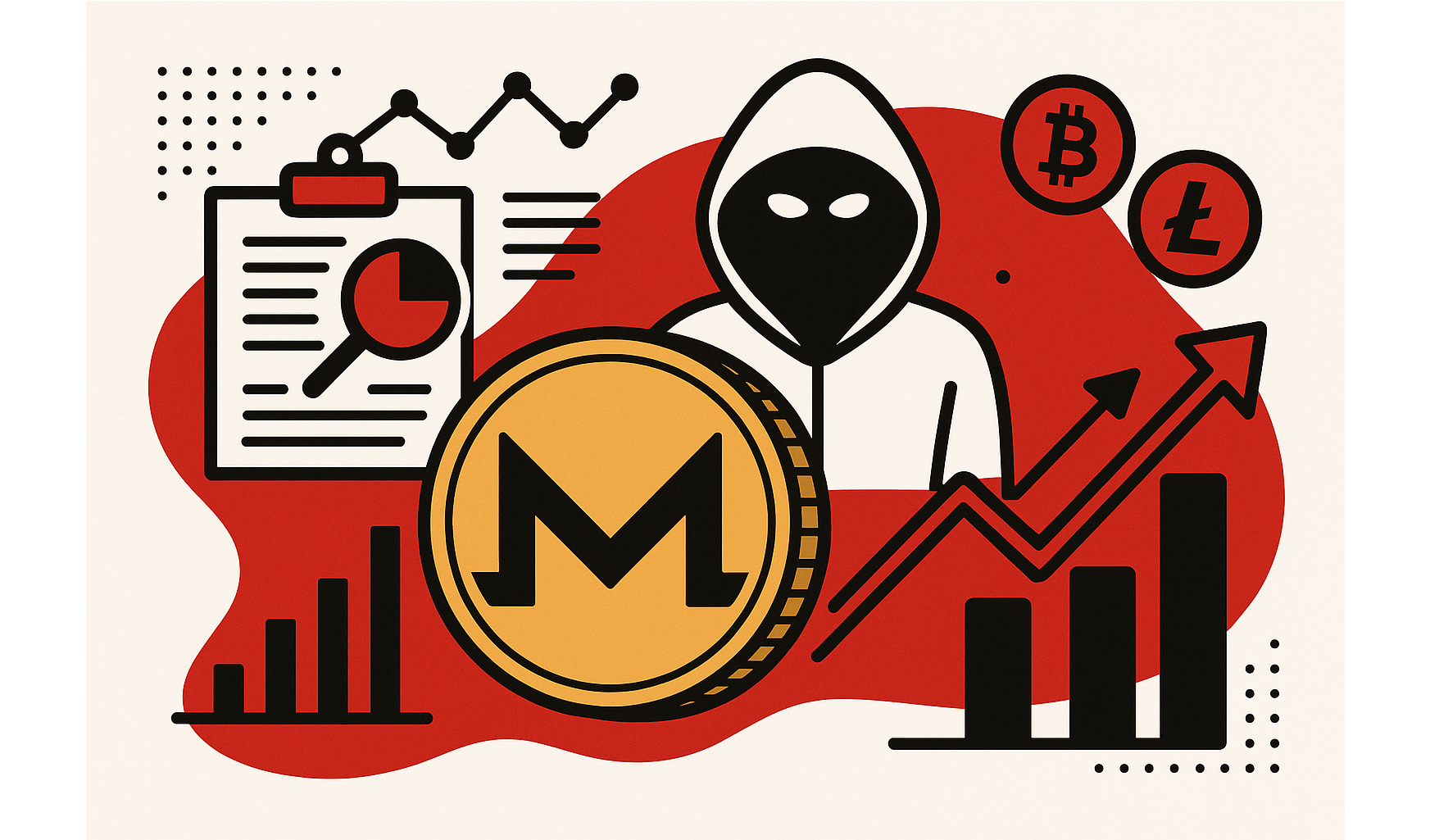
Monero (XMR) is not just another digital asset. It represents an entire philosophy of privacy, financial freedom, and anonymity — making XMR a symbol of resistance against centralized control. As regulators around the world increasingly demand transaction transparency, xmr exchange remains in demand, despite growing regulatory challenges. But where did it all begin, and why does Monero still remain relevant?
The History of Monero
The Monero project was launched on April 18, 2014, as a fork of Bytecoin — the first crypto project to use CryptoNote technology. The name “Monero” comes from the Esperanto language and translates to “coin.” Unlike Bitcoin, where all transactions are public, Monero was designed from the ground up to be private. It was originally called BitMonero but was renamed shortly after launch.
Key early contributors operated under pseudonyms: thankful_for_today, smooth, and Riccardo Spagni (known as Fluffypony). The latter became the project’s most recognizable face, with a strong stance on privacy that still resonates with the crypto community. On his account on X (X, @fluffypony), he often shares thoughts on the future of private coins.
“Privacy is not a crime. It’s a right that should be accessible to everyone, especially in finance.” — Riccardo Spagni
Interesting Facts About Monero
Monero is truly anonymous. Unlike most cryptocurrencies, Monero uses Ring Signatures, Stealth Addresses, and RingCT, making it nearly impossible to trace the sender, receiver, or transaction amount.
CPU Mining Friendly. Monero can be mined even on a regular PC, promoting decentralization — unlike BTC mining, which is dominated by industrial-scale mining pools.
No fixed supply. After reaching 18.4 million coins, Monero enters a phase called “tail emission,” continuously releasing a small amount (0.6 XMR per minute) to keep miners incentivized.
These features make buying Monero appealing not just for anonymous payments but also as a long-term investment.
Monero’s Market Niche
Monero occupies a narrow but crucial niche — privacy. If Bitcoin is the “digital gold,” Monero is the “digital cash.” Its utility shines in contexts requiring full confidentiality — from surveillance protection to bypassing sanctions.
According to Chainalysis, despite increasing regulatory scrutiny, Monero’s share in darknet transactions remains stable and in demand. However, it’s important to note: using Monero does not imply illegal activity. It’s a tool for protecting freedom, especially in countries with authoritarian regimes.
Monero’s Competitors
Monero isn’t alone in the privacy coin market. Its key rivals include:
Zcash (ZEC) — Uses zk-SNARKs, but privacy is optional, unlike Monero, where it is default.
Dash — Offers PrivateSend, but this is built on top of standard transactions, making its privacy less robust.
Grin and Beam — Newer players using MimbleWimble, but they currently trail behind Monero in popularity.
According to crypto analyst Andreas Antonopoulos (X, @aantonop):
“If I had to make a completely private transaction, I would choose Monero. Its tech is ahead of the rest.”
Future Outlook
Despite mounting pressure from regulators, interest in Monero is not fading. Many cryptocurrency exchanges still support monero exchange, even after major centralized platforms delisted it. Users are increasingly turning to crypto exchange online platforms, favoring anonymous and peer-to-peer solutions.
What do analysts say?
In a YouTube review, Coin Bureau emphasized that Monero remains one of the few coins that truly uphold privacy values in an era of mass digital surveillance.
According to WalletInvestor, XMR may reach $250–300 during 2025–2026 — especially as mainstream cryptocurrencies lose their privacy features.
Where to Buy and Exchange Monero
If you’re wondering how to buy Monero or exchange Monero for rubles, you’re not alone. More users are turning to cryptocurrency exchange platforms or the best crypto exchanges to avoid leaving digital traces. The easiest way is using a crypto exchange online service, where you can not only exchange XMR, but also convert cryptocurrency into rubles directly.
Many also look for ways to sell cryptocurrency for rubles or transfer cryptocurrency to a bank card — in this case, a trusted cryptocurrency exchanger that supports withdrawing crypto to a card is essential. These solutions are especially relevant when you need to exchange crypto for rubles without undergoing complicated verification.
Conclusion
Monero is not just a cryptocurrency. It’s a movement for financial freedom. In a global climate pushing for transparency and control, XMR stands as a symbol of independence. Though it faces delisting and pressure, xmr exchange lives on, and interest in the project remains strong.
For those who want to protect the anonymity of their financial activity, buying Monero or using monero exchange services is a smart move. Of course, like any tool, Monero requires understanding, responsibility, and compliance with the law. But as long as there’s demand for confidentiality, XMR will hold a unique place in the crypto world.
“Privacy is not a crime. It’s a necessity.” — Edward Snowden (X, @Snowden)
